RAGNAROK
Gallery MONTAN is proud to present the exhibition
“RAGNAROK”
a collaboration between
Backhause-Brown and Egeværk
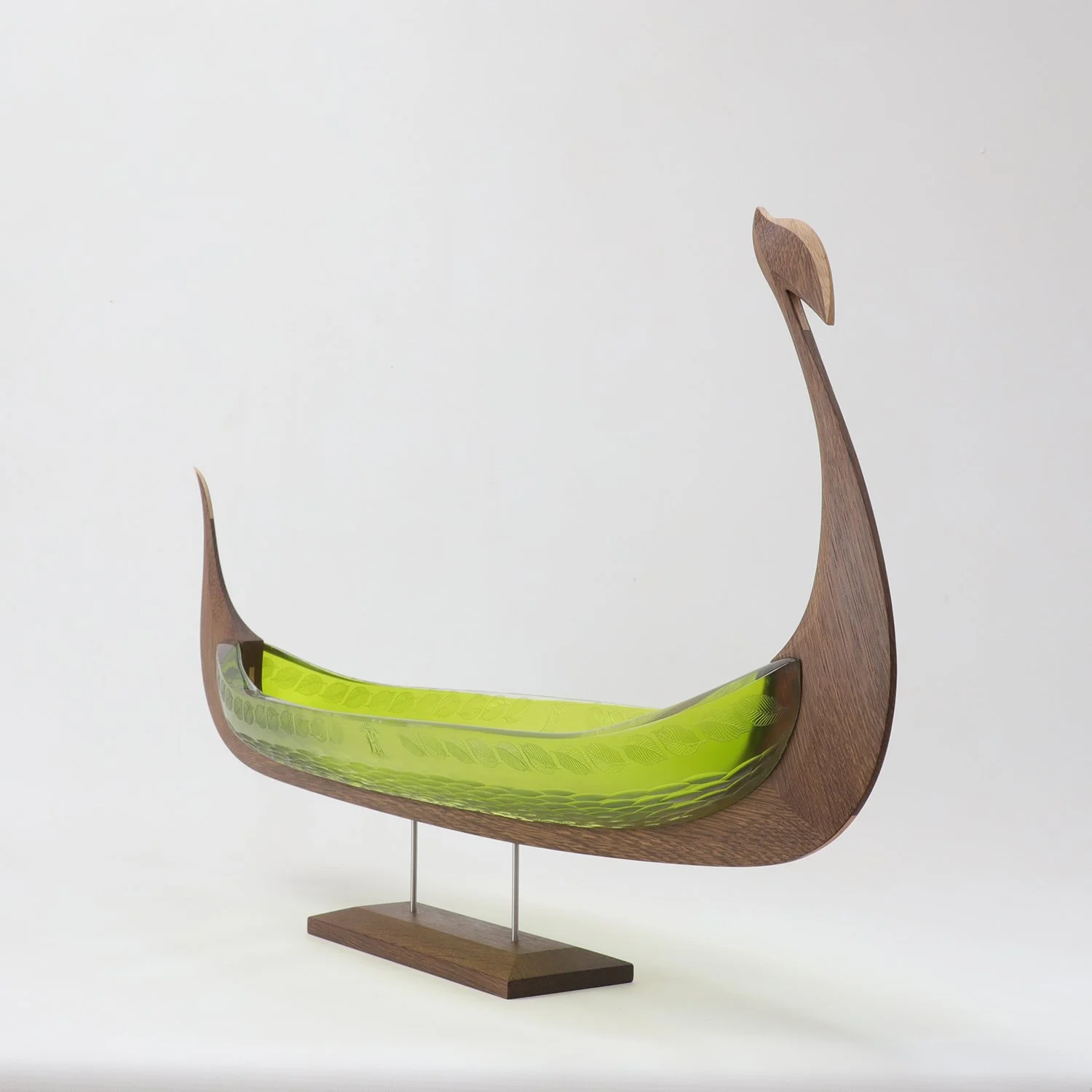
Preview Thursday 2. July
04.00 p.m. – 7.00 p.m
2. July – 15. August
Opening hours
Tuesday - Friday 11.00 a.m. – 5.00 p.m.
Saturday 11.00 a.m. – 3.00 p.m.
RAGNAROK
The Fate of the Gods
Year 536. One day in early spring, while the sun was shining from a cloudless sky, the birds stopped singing, and a cold shiver ran through nature. The sun's glow gradually became less intense, and after a few days it was only very faint, even without clouds in the sky. When people later realized that the moon and the stars had also disappeared, the shock was even greater. For without the sun there was no life, and without the moon there was no coherence in existence. Soon the snow began to fall again, and the plants went dormant. The feeling of winter was back, and the cold, windy and damp weather continued until it almost imperceptibly turned into actual winter. It sounds like a grim fairy tale, but it was reality in the North. Many people died of hunger during this period, as did a large part of their livestock and the wild animals.
In Norse mythology, the Fimbul winter heralds the beginning of Ragnarok, when the world comes to an end. The Fimbul winter is a very harsh winter that lasts for several years, with several summers missing. The stories from the Norse mythology are based on actual events, probably a climate catastrophe caused by a large volcanic eruption in western North America in the mid-6th century. The eruption hurled enormous amounts of volcanic gases and particles high into the stratosphere, weakening the power of the sun on Earth.
In Norse mythology, Ragnarok is introduced both with the mighty Fimbul winter and with the death of the god Balder. It is pre-ceded by moral chaos, where the Aesir have broken their oaths. Here begins the final battle, where the gods will fight against their enemies. The tree Yggdrasil will tremble, and everyone on earth will tremble with fear. The sea will flood the earth when the Midgard Serpent steps on land and spreads venom and poison around it. The sky will crack, and the sons of Muspell will ride out of it with the fire giant Surt at their head. Heimdal will rise and blow his horn, so that the gods will be awakened. Odin will die in battle with the Fenris wolf, which will cause his wife Frigg her second great sorrow after the death of her son Balder. Odin's son, Vidar, will avenge his father by killing the wolf. Freyr will fight Surt, but Freyr will be defeated. The Midgard Serpent will open its mouth so that it reaches from heaven to earth and meets Thor in battle. The snake is killed, but Thor will only walk nine steps before he himself falls over, killed by the snake's venom. The bloodbath is all-encompassing, the Sun darkens, the Earth sinks into the sea, everything burns, the world is destroyed.
In the prophecy of the Völva, however, one hears that the Earth will be resurrected, gods and humans will walk again.
"Many different artists have been inspired by the Norse myth of Ragnarok over the years. In today's world of fragmentation, unrest and climate change, we see the story has once again become relevant and acts as a possible mirror to our present, but with a much-needed message of hope at the end.
– Nanna Backhaus Brown, Mette Bentzen, Andrew Brown and Lasse Kristensen"